
3 min read ·
GunCandy over carbon fiber depends on the clear-coat system
Check GunCandy carrier compatibility, carbon-fiber preparation and cure limits before coating. Test the color without assuming the weave stays visible.
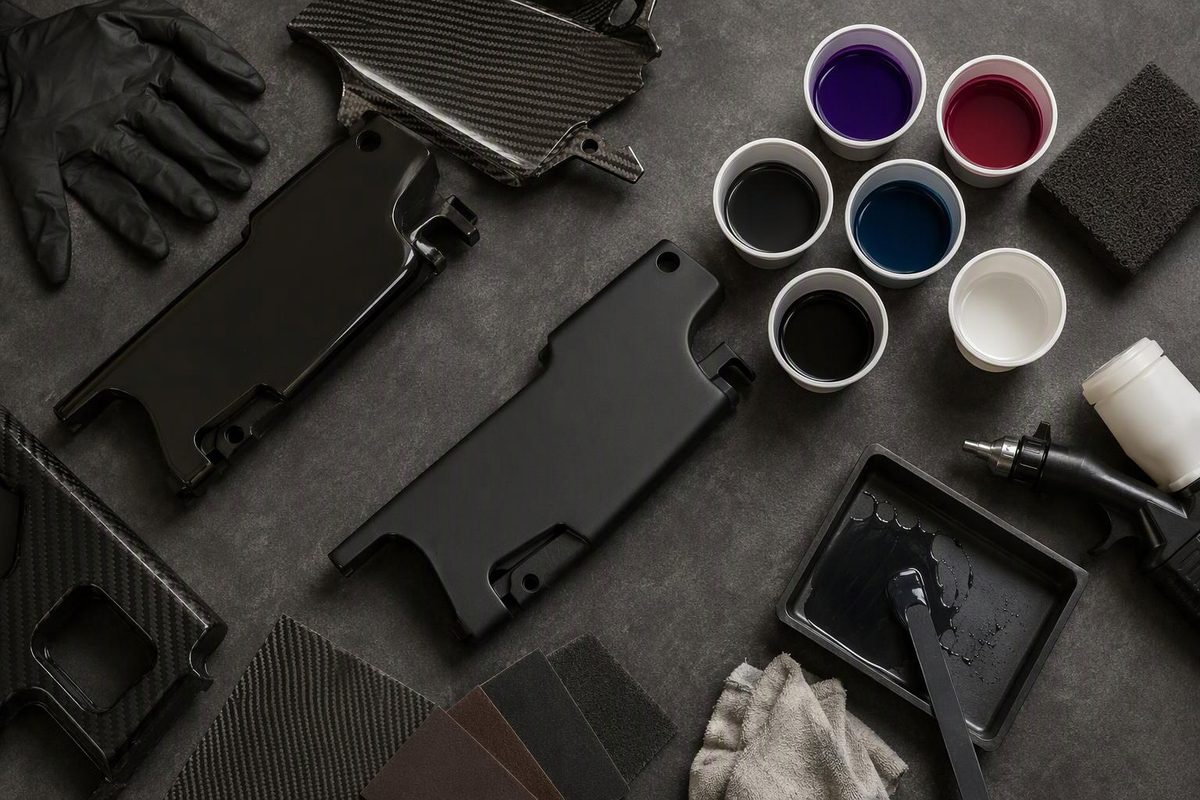
GunCandy over carbon fiber is a conditional coating job—not a direct powder application. GunCandy colors are mixed into a liquid coating, then sprayed according to that coating manufacturer’s instructions. The decision depends on whether the chosen carrier accepts GunCandy and whether its preparation and cure process suit your particular carbon-fiber part. GunCandy’s FAQ describes the mixing process, but does not provide a carbon-fiber-specific application approval.
Check two separate compatibilities
A clear coat approved for carbon fiber is not automatically an approved GunCandy carrier, and an approved GunCandy carrier is not automatically suitable for your composite.
| Product example | What is documented | What still needs confirmation |
|---|---|---|
| Gunkote Super Clear 2409SC | GunCandy lists it as a gloss carrier for its colors; it is an oven-cured, one-part coating. | Suitability for your resin or existing finish, including preparation and the complete bake schedule. |
| Cerakote MC-2200 Multipurpose Clear | Cerakote lists carbon fiber, gelcoat and painted surfaces as suitable applications; the unmodified coating’s full air cure is listed as 24 hours. | Whether adding your selected GunCandy color is acceptable, and the resulting application requirements. |
Sources: GunCandy’s 2409SC listing and Cerakote’s MC-2200 specifications.
Before buying, give the coating supplier the part’s resin type, existing finish and intended exposure. Ask GunCandy and the carrier supplier to confirm the exact carrier, GunCandy color/loading, surface preparation and cure schedule. If heat tolerance is unknown, do not bake the part merely because the coating requires it. Cerakote’s Elite and H-Series training manual likewise directs users to consult the part manufacturer when temperature stability is uncertain; its schedules are not instructions for MC-2200. Cerakote training manual
Prepare the surface without cutting into the weave
First establish whether you are coating a resin surface, gelcoat or an existing clear coat. A deteriorated finish needs correction before another coating is applied; GunCandy is not a repair for damaged laminate.
For cosmetic carbon-fiber refinishing, the FANTOM CLEAR CX technical guide warns that sanding into the carbon fiber can weaken the component and spoil its appearance. It also calls for visible pinholes and voids to be filled before painting rather than covered with more clear coat. Those are useful preparation principles, not evidence that FANTOM CLEAR accepts GunCandy. FANTOM CLEAR CX application guide
Use the selected carrier’s specified cleaner and abrasion method, subject to the part manufacturer’s limits. Do not borrow a metal-part degreasing, blasting or baking procedure. There is no universal sanding grit for “GunCandy over carbon fiber”: the carrier and existing surface determine it.
If fibers are exposed or damage extends beyond the finish, address that separately using the guidance on epoxy resin for carbon-fiber repair.
Mix and test before coating the whole part
Once the complete system is confirmed:
- Match the jar to the coating volume. GunCandy’s standard-size Amethyst jar treats 4 ounces of clear; medium and large packaging treat a pint and quart respectively. Follow the selected color’s package size rather than assuming every jar treats the same volume. Amethyst product listing
- Mix and strain as agreed with the suppliers. GunCandy’s FAQ specifies shaking for a full minute and recommends 100–120 mesh filters. MC-2200’s unmodified specification calls for 325 mesh, so resolve that difference before treating it as a carrier. Do not silently substitute one instruction for the other. GunCandy FAQ; MC-2200 specifications
- Coat a representative sample first. Use the same resin or finish and preparation, then follow the carrier’s spray, flash and full-cure instructions. Evaluate appearance and use the supplier’s recommended adhesion check before committing the part.
Use the selected products’ safety datasheets to establish ventilation and protective-equipment requirements before spraying. Clear-coat application guides warn against spraying near living spaces or unprotected people and require respiratory, hand and eye protection. FANTOM CLEAR CX application guide
A black base is not mandatory: GunCandy says its recommended bases reproduce the pictured colors, while different bases change the result. If keeping the weave visible matters, test directly over the prepared carbon-fiber finish before adding an opaque base. Judge both the color effect and weave visibility on the cured sample—not from a product photograph. GunCandy FAQ