
3 min read ·
Can You Glue Galvanized Steel Without Primer? Yes—With the Right Adhesive
Primerless bonding is possible with an adhesive rated for galvanized steel. Learn what to clean, when to avoid sanding, and what to check before loading.
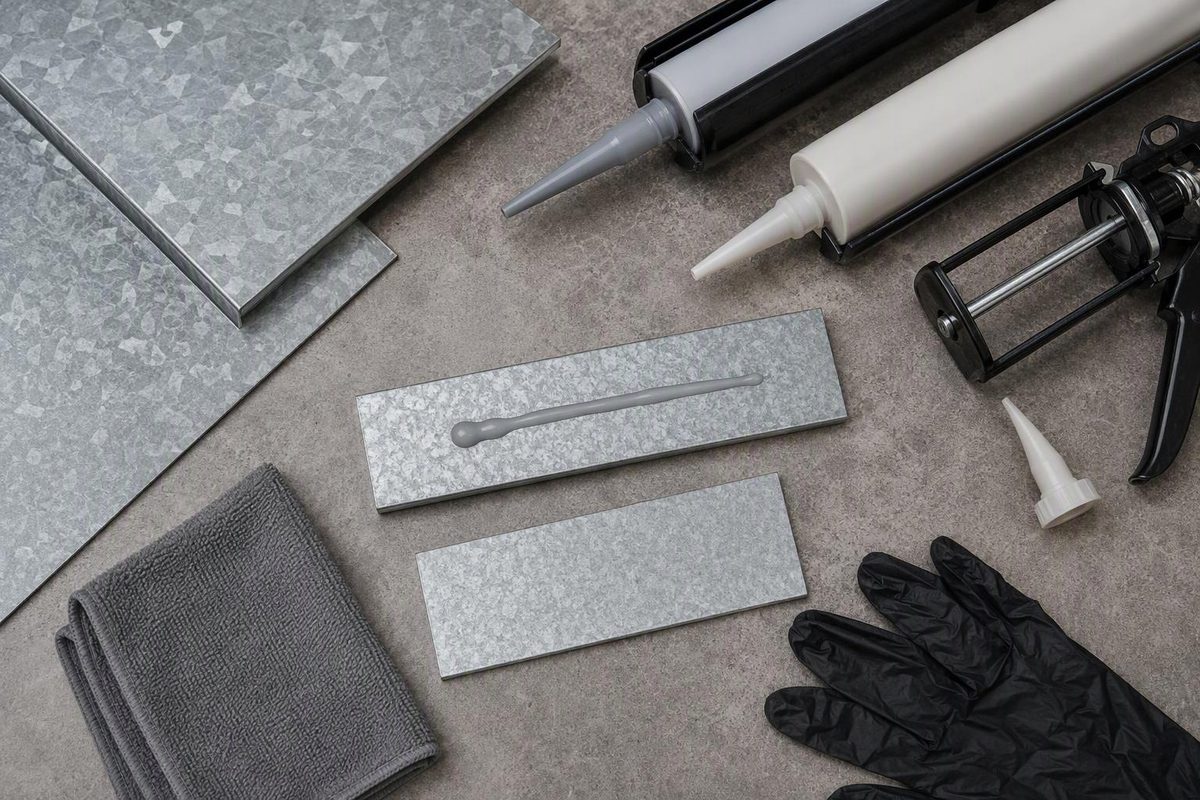
Yes—if the adhesive manufacturer explicitly recommends it for primerless bonding of galvanized or zinc-coated steel. That does not mean every metal glue will work without primer, or that you can skip cleaning. For example, SCIGRIP’s SG3000 technical data sheet explicitly supports primerless galvanized-steel bonding but still directs users to remove dust, loose scale, rust, oil and grease. SCIGRIP SG3000 technical data sheet
What to check before choosing the glue
Look for “galvanized steel” or “zinc-coated steel” and an explicit primerless recommendation, rather than relying on a general “bonds metal” claim. Check compatibility with the second material, allowable joint gap, load, moisture exposure and service temperature. Primerless compatibility alone does not establish that the joint is suitable for the job.
If the steel is painted or has an unidentified surface treatment, tell the adhesive supplier. You need confirmation of compatibility with the surface the adhesive actually touches. A paint layer can limit joint strength through its own adhesion to the metal. 3M surface-preparation bulletin
Where the adhesive instructions require a bonding primer, use the specified product. Do not substitute a general-purpose paint primer or omit the primer simply because another adhesive is marketed as primerless.
Prepare the galvanized surface without blindly sanding it
- Inspect the bonding area. Do not glue over loose, powdery or flaking deposits. Remove contaminants using the adhesive manufacturer’s recommended procedure; ask for guidance if the coating is deteriorating.
- Degrease and dry. Use a cleaner compatible with both substrates and the adhesive instructions. Keep cleaned areas free of fingerprints and dirty cloths, and bond promptly after preparation. 3M surface-preparation bulletin
- Do not automatically grind back to bare steel. Galvanized steel needs its own preparation instructions: 3M specifically warns that abrasion is not advisable in many cases. A generic instruction to abrade steel should not be treated as permission to remove the zinc coating. Confirm any scuffing or chemical treatment with the adhesive supplier. 3M galvanized-steel guidance
“Primerless” describes the bonding system—not permission to bond over contamination.
A documented primerless option
A galvanized-steel-rated, two-part structural methacrylate is one option. SCIGRIP SG3000 is a specific example, formulated for electrogalvanized, hot-dip galvanized and other zinc-coated steels without a separate surface primer. It mixes 1:1 and is non-sag. That recommendation applies to this formulation, not to all methacrylate adhesives. SCIGRIP SG3000 product page
Its technical data sheet lists compatible metals, composites and some plastics, but excludes several low-surface-energy plastic categories. It also states that the product is intended for skilled users. If the second part is wood, plastic or fiberglass, check that material separately; the galvanized side is only half the selection. SCIGRIP compatibility guidance For wood assemblies, see how to glue steel to wood.
Apply, support and test before loading
Follow the selected grade’s mixing, dispensing, bond-line and temperature instructions. Hold the parts stationary through fixturing, then allow the specified cure before applying the intended load. Fixture time is not full cure: SCIGRIP defines it as the point when careful movement or unclamping becomes possible, and notes that lower temperatures slow strength development. Its methacrylate adhesive also requires ventilation and protection from ignition sources; read the safety data sheet before use. SCIGRIP SG3000 technical data sheet
Make a trial joint using the actual coated steel and second material, prepared and cured as intended. For structural, overhead or safety-critical attachments, obtain a validated joint design rather than treating a primerless claim or published strength value as a load rating. SCIGRIP recommends testing that represents the actual manufacturing and end-use conditions. SCIGRIP compatibility and testing guidance