
3 min read ·
Clean Painted Metal With Mild Detergent, Not Abrasives
Clean painted metal with mild detergent and a soft cloth. Learn how to rinse, spot-test cleaners and handle grease or adhesive while protecting the finish.
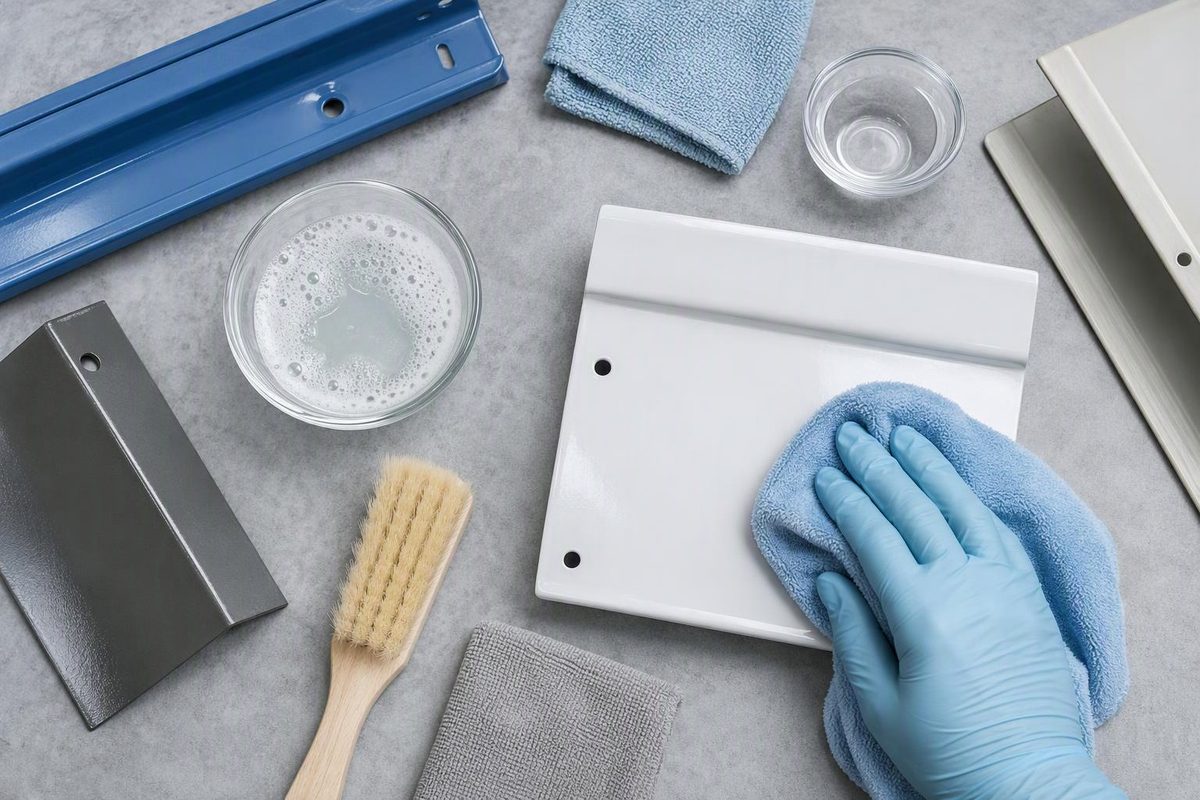
Start with clean water and a soft cloth. If dirt remains, use a dilute, pH-neutral detergent, rinse thoroughly and dry. Treat the surface as paint—not bare metal. A cleaner suitable for steel or aluminum underneath is not automatically suitable for its finish. Dawson Metal recommends water first, then mild soap or detergent for painted architectural metal; Dulux gives a similar sequence for its powder coatings. (Dawson care guide, Dulux care guide)
This method is for routine cleaning while preserving an intact coating, not stripping paint or preparing bare metal for bonding.
A gentle cleaning sequence
You need a clean, soft cloth or sponge, water, a mild pH-neutral detergent and a clean drying cloth. Avoid scouring powders, abrasive pads, steel wool and wire brushes: they can scratch or change the coating’s texture and gloss. (VS powder-coated steel guidance)
- Check the finish and its care instructions. If paint is peeling, blistered or exposing rusty metal, do not try to scrub it back into sound condition. For newly painted items, follow the paint manufacturer’s instructions on when washing is permitted.
- Work on a cool surface, preferably in shade. Heat can dry the cleaner too quickly and cause streaking. Do not let cleaning solution dry on the paint. (Dawson care guide)
- Remove loose dirt with water. Use a wet sponge gently, or rinse an item designed to tolerate rinsing. Keep cloths and sponges grit-free rather than rubbing trapped dirt across the finish.
- Spot-test the detergent. Dilute it according to its label and the coating’s care instructions. Clean an inconspicuous area, rinse and let it dry before checking for a change in color, gloss or texture. There is no single dilution suitable for every detergent and coating.
- Wash gently in small sections. Use light pressure with a soft cloth or sponge. Repeat a gentle pass rather than increasing pressure or switching to an abrasive.
- Remove all cleaner residue and dry. Rinse water-tolerant items with clean water; for small items, wipe repeatedly with a clean, water-dampened cloth. Dry with a soft, lint-free cloth, paying attention to joints and crevices where liquid can collect. Dawson specifically calls for thorough rinsing and drying of these areas. (Dawson care guide)
If detergent does not remove the mark
Grease or sticky adhesive residue: Do not jump straight to acetone, paint thinner or a citrus-based remover. Check the coating manufacturer’s approved cleaner list first. Solvent compatibility varies even among powder coatings: Dulux permits isopropyl alcohol or methylated spirits for localized stubborn stains, followed by rinsing, while VS prohibits organic solvents on its powder-coated steel furniture. Use solvents only where your coating’s care instructions permit them. A successful spot-test alone does not establish compatibility: Dulux warns that damage from unapproved cleaners may be delayed. (Dulux, VS)
If no compatible remover is documented, stop rather than experiment with stronger chemicals. For cured super glue, see the separate guide to acetone removal and its surface limits; painted metal still requires a finish-specific compatibility check.
White, powdery residue: This may be chalking from weathered paint, not simply dirt. Gentle washing can remove loose material, but persistent chalking is a coating-condition issue. Do not keep scouring to restore gloss. (Painted metal building maintenance guidance)
Rust stains, bubbling or exposed metal: Find the source before cleaning further. Rust staining can come from loose steel debris or unprotected edges; damaged paint needs repair advice, not progressively stronger cleaner. Avoid treating an unidentified painted finish with acid rust remover. (Painted metal maintenance guidance, Dawson care guide)