
5 min read ·
Remove Super Glue From Plastic Without Haze or Cracks
Remove cured super glue from plastic with warm soapy water and gentle lifting. See when acetone, alcohol and CA debonder can haze, crack or soften it.
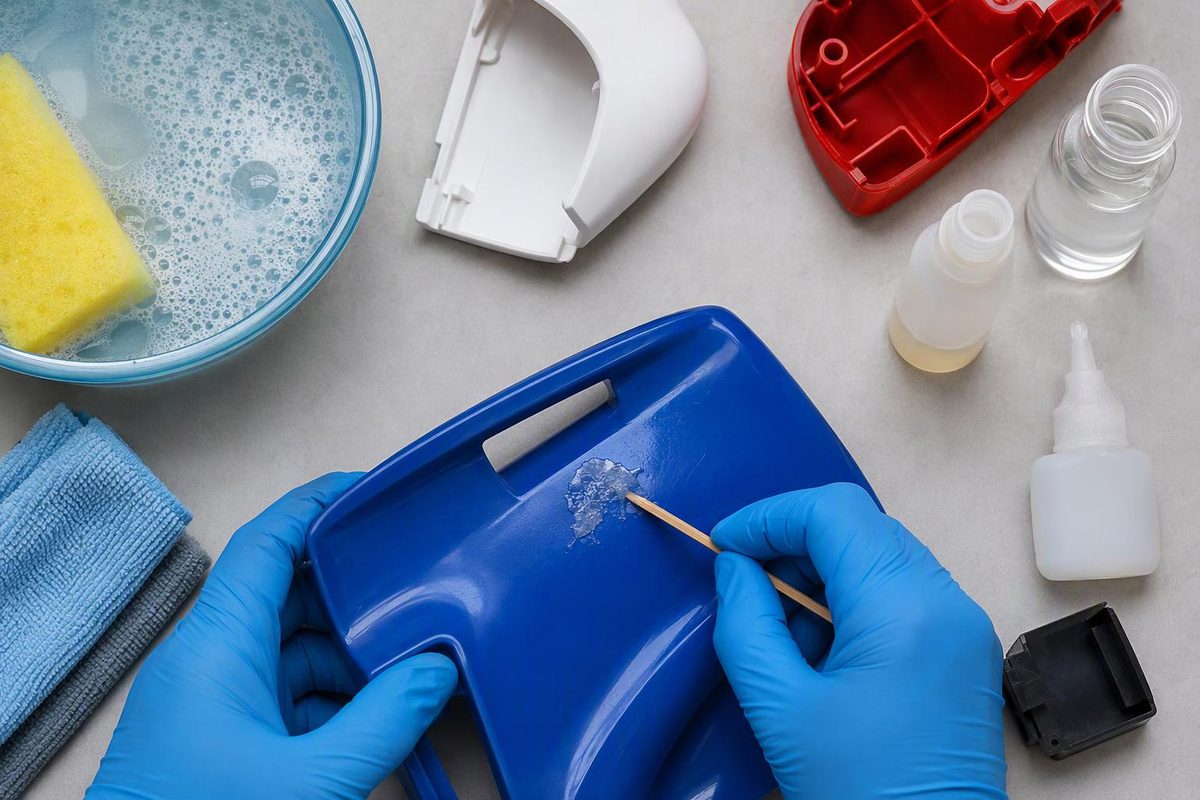
Start with warm, soapy water—not acetone. For cured super glue, soak a water-safe plastic item for about 30 minutes, or hold a warm, wet, soapy cloth against the deposit if the item cannot be immersed. Gently lift a loosened edge with a fingernail or nonmetallic scraper. Repeat the soak instead of forcing the glue, and do not put acetone on unidentified plastic.
Choose the glue condition, plastic type and water-safe method; the tool shows the safest first move.
Use a Warm, Soapy Cloth
Hold a warm, wet, soapy cloth against the cured glue and keep it wet. When an edge loosens, lift it gently with a fingernail or low-angle plastic scraper. Repeat rather than forcing it.
Do not use acetone on unidentified, clear, painted or coated plastic. If water is insufficient, spot-test vegetable oil only if the item can tolerate it.
Sources: Permabond removal guidance; Gorilla Glue’s plastic method; ACRYLITE and SABIC care guidance; Devcon/Versachem safety data sheet.
The slow approach protects the surface beneath the glue. The solvent that dissolves cyanoacrylate can also cloud, soften or stress plastic. Permabond recommends water as the best first option for many plastics because acetone and cyanoacrylate remover can damage them (Permabond).
Remove Cured Glue in This Order
-
Identify the plastic and its finish. Look for a resin code, molded material mark or manufacturer care instructions. Treat clear plastic, painted or coated plastic, lenses and unidentified plastic as solvent-sensitive. A known base resin does not establish that its paint, printing, plating or soft-touch coating can tolerate the same cleaner.
-
Soften the glue with warm, soapy water. Add a small amount of dish soap to warm—not boiling—water. Gorilla Glue’s plastic-specific method calls for a 30-minute soak and suggests using a damp cloth when immersion is not possible (Gorilla Glue). Keep the cloth wet and check the deposit periodically.
Do not immerse electronics, laminated assemblies or anything that water could enter or damage. On those items, confine the damp cloth to the adhesive and prevent liquid from reaching seams, openings and electrical parts.
- Lift the edge without gouging the plastic. Try a fingernail first. On a durable surface, use a plastic card or purpose-made plastic scraper held nearly parallel to the surface. A low angle reduces the chance that the tool will dig into the plastic.
Do not use a razor blade, screwdriver, abrasive pad or force. Avoid scraping clear and optical surfaces unless their manufacturer permits it; a scratch may be more visible and permanent than the adhesive mark.
-
Repeat the water treatment. Cured cyanoacrylate is brittle, and Permabond advises peeling rather than loading the bond in shear. Water can take considerable time, so several soak-and-lift cycles may be necessary. Stop and re-wet the deposit whenever resistance increases.
-
Try vegetable oil only on a compatible item. If repeated soapy-water treatment is not enough, spot-test vegetable oil in a hidden area. Loctite suggests soaking glue on plastic with vegetable oil for a few hours (Loctite). Work gently at the loosened edge, then wash away the oil with dish soap. Do not use oil where it could stain, enter an assembly or interfere with a coating.
-
Rinse, dry and inspect. Use a soft, nonabrasive cloth. Stop if the surface becomes tacky, dull, white or cracked. Those changes indicate that the plastic or its finish is being affected.
Keep Acetone Off Unknown and Vulnerable Plastics
Do not assume that acetone or rubbing alcohol is plastic-safe. Even after identifying the material, follow the cleaning limits supplied by the item or sheet manufacturer.
Acrylic Can Weaken or Develop Fine Cracks
For acrylic, PMMA, Plexiglas or ACRYLITE, do not substitute acetone or alcohol for the water method. ACRYLITE says not to use either solvent on its acrylic sheet because they can weaken it or produce fine surface cracks called crazing (ACRYLITE).
Crazing may not look like immediate melting. Inspect the surface under good light rather than assuming it is unharmed because it remains rigid.
Polycarbonate Must Be Kept Away From Acetone
For polycarbonate, PC or Lexan, SABIC says never to use acetone on LEXAN polycarbonate sheet. Its manual also warns that incompatible cleaners can cause structural or surface damage and that some coated LEXAN products have additional restrictions (SABIC technical manual).
A restriction for one sheet product should not be treated as permission for every other polycarbonate product. Check the instructions for the actual item, particularly when it has an optical, scratch-resistant or other functional coating.
Finishes Need Their Own Compatibility Check
On painted, printed, plated or soft-touch plastic, compatibility must cover the finish as well as the underlying resin. A solvent that leaves the base plastic intact can still remove lettering, transfer color, dull paint or make a soft-touch layer sticky. Use only a cleaner that the item manufacturer approves.
A commercial CA debonder is not automatically plastic-safe. Permabond CA Solvent is not recommended for acrylic and may affect other plastics, coatings and fabrics. Its technical data sheet calls for compatibility testing before use (Permabond CA Solvent TDS). The words “super glue remover” describe what the product does to the adhesive, not what it will do to the substrate.
If the item manufacturer expressly permits a particular solvent, test one drop on a concealed area and allow it to dry completely. Under good light, check for haze, whitening, color transfer, softening and fine cracks. A successful spot test reduces risk but does not override the manufacturer’s restrictions.
Apply an approved solvent only to the cured adhesive, minimize its contact time and clean the surface as the manufacturer directs. See where acetone is safe for super glue removal for solvent-specific precautions.
Acetone has a 0°F (-18°C) flash point and can irritate the eyes, skin, nose and throat (NIOSH). Follow the product label, ventilate the work area and keep acetone away from heat, sparks and flames.
Treat Liquid Super Glue as a Reactive Spill
Do not wipe liquid super glue with cotton, wool or a cotton cloth. A cyanoacrylate safety data sheet warns that contact with cotton or wool can cause a strong exothermic reaction and fire. It also notes that contaminated cloths may polymerize and auto-ignite (Devcon/Versachem SDS).
Keep skin away, isolate the area and follow the spill instructions on the specific adhesive label or safety data sheet. Once the deposit is fully cured, return to the warm, soapy water and gentle-lifting sequence. Do not start scraping while the adhesive is still liquid because that can spread it across a larger area.
If super glue reaches skin or eyes, do not use the plastic-cleaning procedure. Follow the guidance for getting super glue off skin safely. Eye exposure requires immediate first-aid attention.
Stop Before the Plastic Becomes the Bigger Repair
A slight adhesive mark is usually a better outcome than permanent damage to an optical lens, appliance housing, collectible or safety-related part. Stop if the deposit will not release after repeated gentle treatment, if the material cannot be identified, or if any cleaner changes the surface.
For a valuable, optical or load-bearing component, ask its manufacturer which cleaning agents and tools are approved rather than escalating to an unapproved solvent or sharper scraper.