
3 min read ·
Let Super Glue Dry, Then Remove It in Controlled Steps
Remove dried super glue from washable fabric by scraping, spot-testing acetone, pretreating and washing—without spreading or heat-setting it.
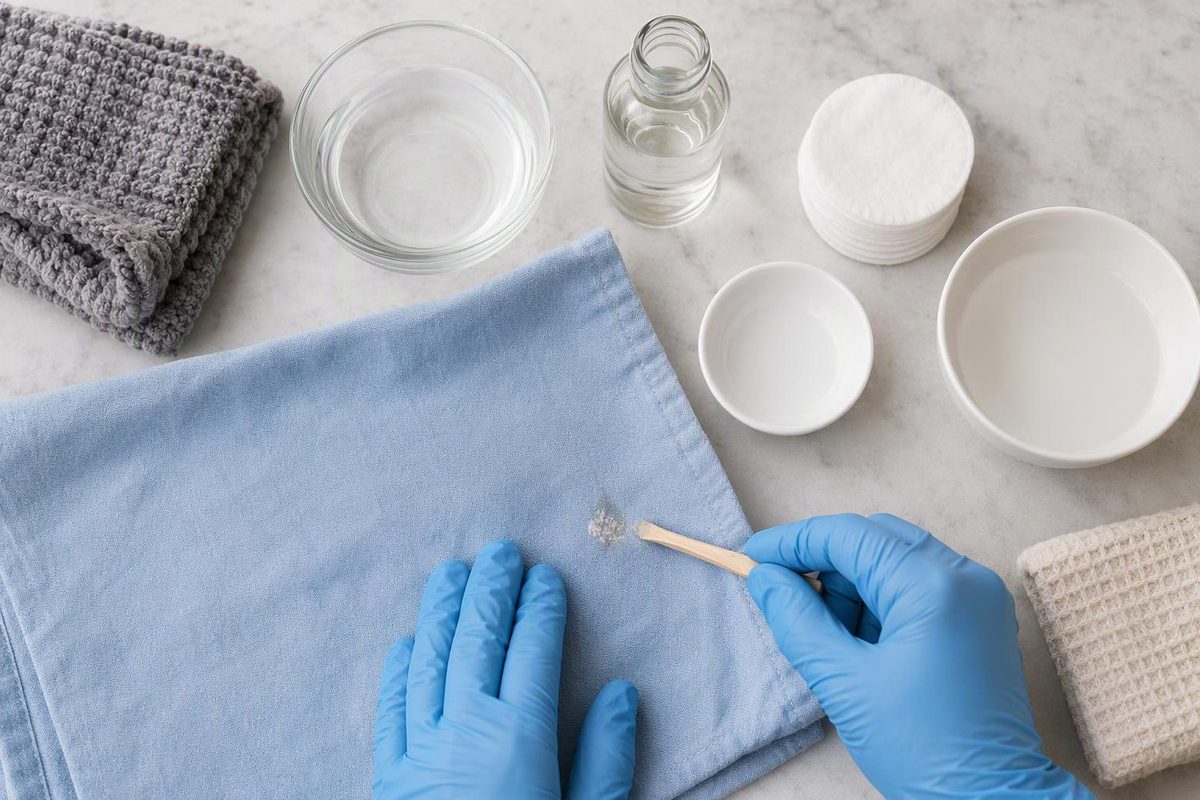
For a small spill that is not touching skin, let the super glue dry, gently scrape away the raised deposit, then spot-test acetone before treating the residue. Wash according to the care label and air-dry until you know the mark is gone.
Do not rub wet glue: that can spread cyanoacrylate through more fibers. Do not use a hair dryer or put the item in a tumble dryer while residue remains; laundry guidance warns that heat can set the mark (Persil).
Treat a hot spill as a burn risk
Fresh cyanoacrylate can produce substantial heat while curing on cotton, wool and other cellulose-rich material. Published cases include full-thickness burns after glue was spilled on clothing (Journal of Cutaneous and Aesthetic Surgery).
If a fresh spill on clothing becomes hot, smokes or causes pain:
- Put the affected area under plenty of cool running water, with soap if available. Experimental findings reported in a pediatric burn case found that cold soapy water reduced the reaction temperature and helped detach the glue (Journal of Cutaneous and Aesthetic Surgery).
- Do not pull off fabric that has bonded to skin.
- Seek urgent medical advice for ongoing heat, blistering, severe pain, a large spill or a broad area of skin involvement. In the US, Poison Control is available at 1-800-222-1222 and confirms that larger quantities can cause burns as the glue polymerizes (Poison Control).
For a small amount on skin without a burn, use the separate guide to getting super glue off skin safely.
Check the fabric before using acetone
| Fabric or condition | Approach |
|---|---|
| Washable fabric with stable color | Scrape, spot-test acetone, pretreat and wash |
| Acetate or triacetate, including blends | Do not use acetone; consult a professional cleaner |
| Silk, wool, delicate trim or dry-clean-only item | Stop after gentle removal of loose glue and use a professional cleaner |
| Unknown fiber or unstable dye | Avoid solvent treatment until the fiber and dye are identified |
Acetone can soften cured super glue, but it can also remove dye, damage a finish or destroy the fabric itself. University of Georgia textile guidance says acetone destroys acetate and dissolves triacetate (UGA Cooperative Extension). Check both the fiber-content tag and care label.
Steps for washable fabric
-
Let the glue harden naturally. Do not wipe, scrub or heat the wet spot. If the garment is bonded to skin, address the exposure before treating the stain.
-
Skim off raised glue. Lay the dry garment flat. Use the edge of a spoon or dull butter knife to lift brittle glue without digging into the yarns. Skip scraping on loose knits or delicate surfaces.
-
Spot-test acetone. Work in a well-ventilated place away from flames, sparks and hot appliances. Acetone is highly flammable, with a 0°F (-18°C) flash point (NIOSH). Apply a tiny amount to a hidden seam, then press it with a white cloth or paper towel. Stop if color transfers or the fabric changes color, texture or sheen. See where acetone is safe for super-glue removal for more compatibility detail.
-
Dab the dried deposit. If the test passes, apply acetone sparingly with a clean white cloth. Work from the outside toward the center. Blot softened material onto clean sections of the cloth rather than rubbing or saturating the garment.
-
Rinse and pretreat. Rinse the treated spot thoroughly. Apply liquid laundry detergent or a garment-compatible stain remover and leave it for the time stated on its label. Loctite also recommends spot-testing acetone on fabric, followed by stain pretreatment and washing (Loctite).
-
Wash, air-dry and inspect. Use the hottest wash setting permitted by the care label. Air-dry and inspect the area in good light. If residue remains, repeat only the treatment that passed the compatibility test. Do not tumble-dry yet.
If acetone fails the spot test
Do not compensate with more solvent, aggressive scraping or heat. For a washable garment, Tide’s nail-glue guidance suggests soaking it in cool soapy water for about 30 minutes, then gently working at the deposit with a soft toothbrush (Tide). This may loosen the deposit but may not remove every trace of cured glue.
Take valuable, delicate, dry-clean-only, acetate or triacetate fabric to a professional cleaner. Identify the stain as cured cyanoacrylate and disclose any solvent already used. If the glue or cleaning attempt has altered the dye or fibers, complete restoration may not be possible.